
By Best Sourcing Agent | Date: April 3, 2026
Data verified as of April 3, 2026. Port conditions change rapidly — verify current status with your freight forwarder before making booking decisions.
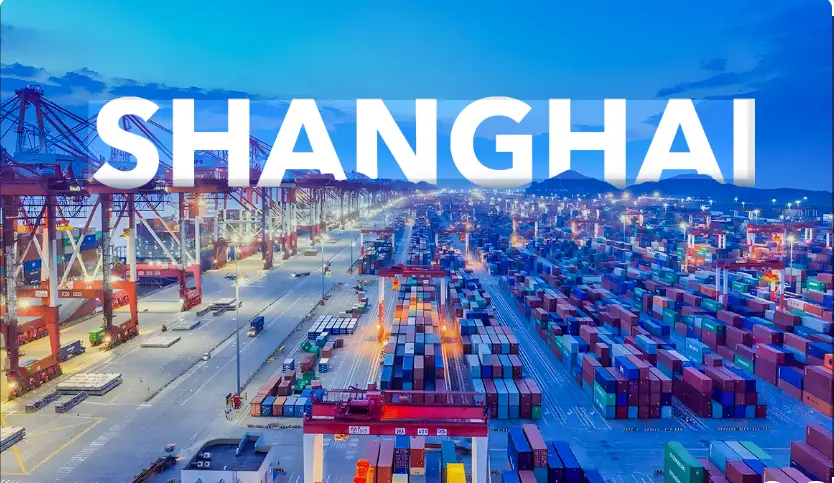
What’s Actually Happening at Shanghai Right Now
Shanghai is not operating like a normal port right now. Vessel-to-gate-out cycles averaging over 10 days mean your “35-day transit” just became 42 days — with no carrier notification and no rate adjustment.
I had a call last week with a European buyer who was absolutely furious. His goods left the factory on time, his booking was confirmed, his supplier sent him the bill of lading — and then nothing moved for six days. Not a typhoon, not a strike. Just Shanghai being Shanghai at the wrong moment.
Here’s the ground truth. VIZION’s TradeView platform — which aggregates live vessel and container data across major ports — has been tracking Shanghai’s full arrival-to-gate-out cycle at approximately 10.1 days. That breaks down into roughly 2.4 days waiting to berth after arrival, plus around 6.5 days of terminal dwell after discharge before a container actually exits [citation: VIZION TradeView, 2025]. On paper your vessel arrived. In practice your goods are still sitting in Yangshan waiting for a truck slot.
The pre-Chinese New Year 2026 period made it worse. Maritime News reported that Shanghai averaged 2.16 days of vessel wait, with spikes up to five days at the WGQ2 terminal during the cargo surge in mid-February. SEKO Logistics described conditions as “COVID-level congestion” — and that’s not marketing copy, that’s an operational advisory [citation: SEKO Logistics, 2026-02-10; Maritime News, 2026-02-23].
“Five days waiting to berth sounds like a logistics problem. For a retailer with a product launch date locked in or an Amazon FBA seller facing a stockout, it’s a revenue problem. The port doesn’t know the difference.”What trips people up is the gap between carrier ETAs and reality. Portcast’s analysis makes the point precisely: a vessel might arrive on time but wait two days at the terminal before unloading — and none of that shows up in the carrier’s ETA update. You’re checking the tracking portal, it says “arrived,” and you assume the clock is ticking down. It’s not [citation: Portcast, 2026-03-30].
Three Root Causes That Won’t Fix Themselves Quickly
Shanghai’s congestion is not random. It’s the product of three structural factors that overlap and amplify each other — and none of them are going away in the next 30 days.
1. Volume surges triggered by tariff windows
Every time US-China trade policy shifts — a tariff truce, a ruling like the February SCOTUS decision, an exclusion extension — importers rush orders. In May 2025, freight bookings from China to the US rocketed 300% in a single week as importers used a temporary tariff window to push through delayed shipments [citation: Metro Global Forwarding, 2025-05-27]. Shanghai cannot absorb 300% volume spikes gracefully. Yard occupancy hits the ceiling. Vessel bunching — where multiple ships arrive simultaneously because they all chased the same market window — creates a berth queue that takes days to clear.
2. Vessel bunching and schedule unreliability
When schedules slip, carriers try to recover by speeding up between ports. That means multiple vessels that were supposed to arrive a day apart all arrive together. The terminal, designed to handle a steady flow, gets hit with a wave. Global schedule reliability is running at roughly 52% — just over half of vessels berth within one day of their scheduled arrival [citation: Global Forwarding / JOC data]. That’s not a blip. That’s the baseline. Vessel bunching is the new normal.
3. Yard congestion and empty container backlog
At the end of December 2025, over 120 vessels were anchored at Shanghai and Ningbo simultaneously, with berthing delays of three to four days at Shanghai specifically [citation: Global Forwarding, 2025]. A big part of the yard congestion problem is empty containers — boxes that need repositioning to where exports demand them, sitting in terminal yards taking up space. CMA CGM, Hapag-Lloyd, and Evergreen have all reported tight container availability at Chinese ports. Deploying “sweeper vessels” to clear empties helps, but equipment shortages persist [citation: Global Forwarding, 2025].
✅ Reality: Berth allocation at Yangshan depends on terminal capacity, not carrier prestige. Maersk vessels face the same queue as everyone else. What matters is booking timing, documentation accuracy, and having a local agent who monitors cut-offs in real time.
The Real Cost of a 7-Day Delay — It’s Not Just the Freight Rate
Port delays create four cost categories that most importers only discover after the fact. A good China sourcing agent helps you quantify and hedge all four before the shipment leaves the factory.
Most buyers I talk to think about port delays in terms of transit time. Seven extra days, they figure, means arriving a week late. That’s the smallest part of the problem.
Here’s what actually accumulates when your container sits in a congested terminal for five to seven days longer than planned:
Demurrage and detention charges. The moment your container’s free time expires at the destination port, you start paying. Depending on the carrier and destination, this runs USD 75 to USD 200+ per container per day. A seven-day overrun on a 20-container shipment is anywhere from USD 10,000 to USD 28,000 — before you’ve unloaded a single box. Normal import dwell times at efficient ports run 3–5 days. Congested terminals push this to 7–10 days or beyond [citation: Kpler, 2025-11-25].
Inventory financing cost. Goods sitting in a terminal are working capital you’re paying interest on but can’t sell. For a USD 200,000 shipment at a 6% annual financing rate, seven extra days costs roughly USD 230 in interest. Not catastrophic alone, but multiplied across dozens of shipments per year, it adds up fast.
Production and sales disruption. A manufacturer receiving components late shuts down a production line. A retailer hitting a stockout during peak season loses not just one order but repeat customers. These costs rarely appear in a logistics invoice but they’re real — and they’re the ones that make CFOs ask hard questions about supply chain resilience.
Expediting costs. Once delay becomes unavoidable, buyers often respond by air-freighting the most urgent portion of the shipment. Air freight from China to Europe runs roughly USD 5–8 per kg. A partial air shipment to cover a stockout can cost ten times the original ocean freight bill.
I know a sourcing agent for e-commerce brands who keeps a simple rule: every day a shipment is delayed costs the client 0.3% of the shipment value in direct and indirect costs. On a USD 150,000 order, seven extra days = USD 3,150 in costs you didn’t budget for. That’s before demurrage.
6 Moves a Good Sourcing Agent Makes Before Your Cargo Gets Rolled
Port congestion is not fully controllable, but its impact on your specific shipment is. The difference between a delayed shipment and an on-time one is often six operational decisions made before the vessel arrives.
This is where the value of working with an experienced import export agent is most visible — and most quantifiable. Here’s what we actually do when Shanghai is running hot:
Move 1: Book earlier than the published CY cut-off.
Most shippers book to the published cargo yard cut-off. That’s already too late when yard occupancy is high. When terminals are congested, gate-in controls kick in — terminals stop accepting new boxes even before the official cut-off to prevent the yard from exceeding capacity. A good sourcing agent books two to three days ahead of the published cut-off during congestion periods and monitors gate-in status daily.
Move 2: Submit documentation before the vessel arrives, not after.
Shanghai’s customs clearance bottleneck is heavily documentation-driven. Discrepancies on commercial invoices, incorrect HS codes, missing certificates of origin — each one triggers a hold that can add 24 to 72 hours of dwell time, on top of the congestion delay. Pre-clearance of documentation while the vessel is still at sea is standard practice for any serious China sourcing agent with factory audit and customs experience. Verify everything before the vessel berths.
Move 3: Monitor vessel bunching and request rolled-cargo insurance.
When terminals are full and a vessel arrives to a congested berth, carriers sometimes skip the port entirely — this is called a “port omission” or “rolled cargo.” Your shipment stays in Shanghai while the vessel sails without it. It’s legal. It happens. A proactive agent monitors vessel schedules via AIS tools (Portcast, MarineTraffic, GoComet) and flags bunching risk at least 72 hours in advance. If omission risk is high, they contact the carrier to secure a guaranteed loading commitment — or start preparing a backup vessel option.
Move 4: Negotiate free time at destination port before booking, not after.
If Shanghai delays your arrival at Rotterdam or Los Angeles by seven days, you land with your free time already eaten into. Standard free time at destination ports runs three to seven days depending on the carrier. Negotiating an extension upfront — especially for larger shipment volumes — is easier and cheaper than paying demurrage after the fact. Most importers don’t know this is negotiable. Most sourcing agents do.
Move 5: Keep the factory informed and flex production scheduling.
If the congestion delay is significant — say, ten-plus days — it sometimes makes sense to adjust production timing at the factory. Better to hold finished goods in a bonded warehouse in China at USD 0.10 per CBM per day than to pay USD 150 per container per day in detention at the destination port. This requires real-time coordination between the sourcing agent, the factory, and the freight forwarder. It’s exactly the kind of coordination that a best sourcing agent for low MOQ or custom products should be handling — not you, trying to manage it via WhatsApp at midnight.
Move 6: Have an air freight contingency pre-quoted for your highest-value SKUs.
Not every product makes sense to air freight. But for the top 20% of your SKUs by revenue — the ones that cause a stockout to hurt most — having a pre-quoted air freight option ready means you can make a cost-benefit decision in hours, not days, when a delay hits. We routinely pre-quote air options for clients as a “break glass” option at the start of each quarter, even when they expect to ship everything by sea.
Alternative Ports and Routing: When to Use Them and When Not To
Routing through Ningbo, Qingdao, or Tianjin is not a universal fix — each alternative has its own congestion pattern and cost structure. The decision requires shipment-specific analysis, not a blanket policy.
The most common question I get when Shanghai is congested: “Can we just use Ningbo?” Sometimes yes. But Ningbo has its own problems. At the end of 2025, Ningbo’s MSICT terminal was running at 84% yard occupancy — and berthing delays there were running two to three days [citation: Maritime News, 2026-02-23; Global Forwarding, 2025]. Congestion spreads from Shanghai to Ningbo like a wave, because diverted cargo hits an already-busy port.
Qingdao and Tianjin are genuine alternatives for cargo originating in northern China or inland provinces — and for those origins, they often outperform routing through Shanghai under congestion conditions. For cargo from Zhejiang, Jiangsu, or Shanghai itself, the trucking cost to Qingdao usually offsets any savings on port dwell.
Here’s a simple decision framework. Use an alternative port if: (1) your factory is geographically closer to that port than to Shanghai; (2) the destination port has better direct service from the alternative origin; or (3) you have time-sensitive cargo and Shanghai’s wait time is projected at four-plus days with no confirmed recovery timeline. Don’t switch ports just because your friend’s shipment got delayed — port conditions shift week by week, and a routing decision based on last month’s congestion data might route you straight into next month’s problem.
BSA Original Insight: Treat Congestion Tolerance as a Supplier Selection Criterion
🔍 BSA: Most importers evaluate suppliers on price, quality, and lead time. Almost none evaluate them on port proximity and congestion sensitivity — and that’s a systematic blind spot. A supplier 40km from Yangshan, on a road network that gets gridlocked during port surges, is structurally riskier than a supplier 120km away with direct motorway access to a less-congested terminal. We propose adding “logistics exit risk” as a fourth dimension in supplier qualification — alongside price, quality, and lead time. In a world where Shanghai can eat five days of your transit time on a bad week, the supplier you can actually get cargo out of reliably is worth a price premium over the one who quotes 3% lower but costs you ten days of demurrage twice a year.I’ve started asking this question with every new factory qualification we run: “When Shanghai is at 90% yard capacity, which terminal does your trucking company use for gate-in, and what’s the typical cut-off compliance rate?” Most factories can’t answer that question. The ones that can are telling you something important about their logistics maturity — and about your real lead time risk.
Frequently Asked Questions
- Q: How long are containers actually sitting at Shanghai right now before they leave the terminal?
- Based on VIZION TradeView data, the full cycle from vessel arrival to gate-out at Shanghai is averaging approximately 10.1 days — broken into roughly 2.4 days waiting to berth and 6.5 days of dwell time after discharge. During peak congestion periods (tariff rushes, pre-holiday surges), vessel wait times alone can hit five days [citation: VIZION TradeView, 2025; Maritime News, 2026-02-23]. Normal import dwell at an efficient port is 3–5 days [citation: Kpler, 2025-11-25].
- Q: Will switching from Shanghai to Ningbo solve my delay problem?
- Not automatically. Ningbo mirrors Shanghai’s congestion pattern — during the late 2025 surge, Ningbo’s MSICT terminal hit 84% yard occupancy with two-to-three-day berthing delays. Ningbo works better for cargo originating closer to that port or for shipments that have direct service to your destination. For cargo that would normally exit via Shanghai, the trucking and re-routing cost often offsets any terminal advantage.
- Q: Is there any way to get my container prioritised during congestion?
- Yes, in several ways. Pre-clearance of customs documentation removes the most common cause of extended dwell after discharge. Booking ahead of published CY cut-offs (not to them) reduces rolled-cargo risk. Carriers do offer priority loading options on some routes for premium freight. And for critical shipments, a warehouse in Shanghai bonded zone can hold goods under customs supervision until a clear vessel window opens — often cheaper than paying demurrage at destination.
- Q: How do I know if my specific vessel is at risk of being rolled?
- AIS-based tracking tools (Portcast, GoComet, MarineTraffic) let you monitor vessel position, anchorage time, and terminal congestion in near real-time. The early warning signal is vessel bunching — when three or four vessels that were scheduled to arrive across different days all converge at the same terminal within 24 hours. A good import export agent monitors this proactively and escalates to the carrier before the vessel arrives, not after it’s been skipped.
- Q: Should I be air freighting my cargo to avoid port delays?
- For most cargo: no. Air freight from China to Europe or the US runs USD 5–8 per kg — typically ten to fifteen times the cost of sea freight. It makes sense for the highest-value, smallest-volume items where a stockout loss exceeds the air freight premium. The right approach is to pre-quote air freight options as a contingency at the start of each shipping cycle, so you can make a fast, informed decision when a delay hits rather than a panicked one.
Key Terms Defined
- Container Dwell Time
- The time a container remains in the terminal yard after being discharged from the vessel until it is picked up (gate-out). Normal range at efficient ports: 3–5 days. At congested terminals: 7–10 days or longer. Extended dwell time directly reduces yard capacity and worsens congestion in a feedback loop.
- Vessel Bunching
- When multiple vessels that were originally scheduled to arrive at a port across separate days arrive simultaneously — often because carriers sped up to recover schedule delays. Bunching overwhelms terminal berth capacity and creates sudden, sharp wait-time spikes.
- Port Omission / Rolled Cargo
- When a vessel skips a scheduled port call entirely due to congestion, schedule pressure, or operational factors. Cargo that was booked on that vessel “gets rolled” — left behind for the next available vessel, adding typically 7–14 days of delay.
- CY Cut-Off (Container Yard Cut-Off)
- The published deadline by which cargo must be delivered to the container yard for loading on a specific vessel. During congestion, terminal gate-in controls often close before the published cut-off when yard capacity is reached.
- Demurrage
- Charges levied by the shipping line when a container is not returned (or collected) within the agreed free time at the destination port. Typically USD 75–200+ per container per day depending on carrier and port.
- Detention
- Charges levied when a container is kept outside the terminal (in use by the shipper or consignee) beyond the free time allowed. Often confused with demurrage — demurrage is inside the terminal, detention is outside.
- AIS (Automatic Identification System)
- A transponder system used on vessels to broadcast position, speed, and heading. AIS data is the foundation of real-time port congestion tracking tools like Portcast, GoComet, and MarineTraffic.
- Sourcing Agent (China Sourcing Agent)
- A company or individual that represents a buyer’s interests in China — handling supplier identification, factory audit, quality inspection, order management, and logistics coordination. A best sourcing agent for custom products integrates logistics risk monitoring into their standard service.
- MOQ (Minimum Order Quantity)
- The minimum number of units a factory will accept per production run. Relevant to port congestion when buyers consider splitting large orders into smaller shipments to reduce per-vessel exposure to delay risk.
- Pre-clearance
- Submitting customs documentation to destination customs authorities while the cargo is still in transit, before the vessel arrives. Pre-clearance reduces terminal dwell time at destination by eliminating documentation review from the post-arrival critical path.
The Bottom Line: 3 Questions Every Importer Should Ask Right Now
Port congestion at Shanghai isn’t breaking news. What is news is that the gap between importers who have a plan and those who don’t has never been more expensive.
1. Do I know my container’s actual position in the Shanghai terminal — not just the carrier’s ETA? If the answer is “I check the carrier portal,” that’s not enough. Carrier ETAs don’t show terminal dwell or berth wait. Get a real-time tracking tool or a sourcing agent who runs one.
2. Does my current freight forwarder or sourcing agent have a live gate-in cut-off monitoring process, or are they booking to published deadlines? In a congested environment, published cut-offs are a floor, not a target. If your logistics partner isn’t booking two to three days ahead during peak congestion, you’re running unnecessary rolled-cargo risk.
3. Have I pre-negotiated free time extensions at destination for shipments routing through Shanghai? If not, every day of port delay is a day of demurrage you could have negotiated away before departure. That conversation takes ten minutes with the carrier account manager. The demurrage bill takes weeks to dispute and almost never gets fully reversed.
The importers who come out of congestion periods in the best shape aren’t the ones who got lucky. They’re the ones who treated port risk like currency risk — something to hedge systematically, not react to after the fact.
📚 Cite This Article
APA: Best Sourcing Agent. (2026, April 3). Shanghai port delays hit 5–7 days: What every importer must do right now to protect their supply chain. Best Sourcing Agent. best-sourcing-agent.com/blog/…
MLA: Best Sourcing Agent. “Shanghai Port Delays Hit 5–7 Days.” Best Sourcing Agent Industry Insights, 3 Apr. 2026, best-sourcing-agent.com/blog/…
📎 Get HTML embed code
<blockquote cite="https://best-sourcing-agent.com/blog/shanghai-port-delays-5-7-days-importer-supply-chain-protection-2026">
  "Five days waiting to berth sounds like a logistics problem. For a retailer with a product launch date locked in, it's a revenue problem."
  — <a href="https://best-sourcing-agent.com/blog/shanghai-port-delays-5-7-days-importer-supply-chain-protection-2026">Best Sourcing Agent, April 2026</a>
</blockquote>- Full arrival-to-gate-out cycle: ~10.1 days
- Average wait to berth: ~2.4 days
- Terminal dwell after discharge: ~6.5 days
- Peak recorded vessel wait: up to 5 days (WGQ2 terminal, Feb 2026)
- Normal import dwell at efficient ports: 3–5 days
- Global schedule reliability: ~52%
Sources & Citations
- VIZION. “Port Congestion 2025: Track Vessel Delays and Container Dwell Times with TradeView Data.” vizionapi.com, 2025.
- Maritime News. “Container Freight Rates Slump Due to Capacity Adjustments and Port Congestion in Mid-February 2026.” maritimenews.com, February 23, 2026.
- SEKO Logistics. “COVID-Level Congestion Returns at Major China Ports Ahead of Chinese New Year 2026.” sekologistics.com, February 10, 2026.
- Global Forwarding. “Cascading Port Congestion Triggers Vessel Delays.” globalf.com, 2025.
- Kpler. “Port Congestion: A Guide to Measurement, Impact, and Management.” kpler.com, November 25, 2025.
- Portcast. “Port Congestion Snapshot: Live Vessel Wait Times (Updated Weekly).” portcast.io, March 30, 2026.
- Metro Global Forwarding. “Cargo Rush Sparks Port Congestion and Equipment Shortages.” metro.global, May 27, 2025.
- Maersk. “Chinese New Year 2026: Supply Chain Prep Guide.” maersk.com, November 4, 2025.
- Conqueror Network. “Port Congestion 2025: The Most Congested Ports Right Now.” blog.conquerornetwork.com, May 2025.
- SeaVantage. “Container Dwell Time Explained: Causes, Impacts, and Solutions.” seavantage.com, September 2025.
- Scan Global Logistics. “2026 Kicks Off with a Carrier and Tariff Big Bang.” scangl.com, February 26, 2026.
- GoComet. “China Port Congestion / Delay Status Data.” gocomet.com (live tracker).